

Dogs in Art: Why We’ve Been Inspired by Dogs for Centuries
From loyal companions and working dogs to expressive portraits and modern wall art, discover why dogs remain one of the most emotionally powerful subjects an artist can paint.
A dog can enter a room without saying a word and somehow change its entire atmosphere. The excited greeting at the door. The head that tilts when you say something strange. The quiet look that seems to say, I already know.
That is part of what makes dogs so fascinating in art. We do not simply recognize their shape. We recognize their personalities.
For centuries, artists have used dogs to represent loyalty, companionship, protection, work, affection and the character of the people who lived beside them. Today, a dog portrait can be even more intimate: it can preserve the feeling of a particular companion, or simply bring the unmistakable energy of a beloved breed into a home.
Why Are Dogs Such Powerful Subjects in Art?
The easiest answer is also the most important one: dogs are expressive.
A small change in the position of the ears can make a dog look curious, cautious, playful or alert. The same face can feel completely different depending on whether the eyes are looking directly at us, toward something outside the frame, or softly away.
Then there is posture. A Border Collie standing perfectly still can look intensely focused. A Boxer can feel energetic even when sitting. A Saint Bernard can communicate gentleness through sheer scale. A Rottweiler can appear powerful while still having an unmistakably warm expression.
In other words, a dog portrait gives an artist something more difficult than anatomy: character.
That distinction matters. A technically accurate painting can show fur, paws and proportions. A memorable portrait makes you feel that the animal might look back at you.
If you want to explore how individual breeds developed and how their personalities differ, read 20 Amazing Dog Breeds: Their History, Temperament, and What Makes Them Unique. This article looks at the same subject from another angle: not simply what makes a breed interesting to a dog lover, but what makes it visually fascinating to an artist.
From Working Companion to Portrait Subject
Long before dog portraits became something we might choose for a living room or home office, dogs were working beside people.
They herded livestock, guarded homes, accompanied hunters, pulled loads, travelled with people and protected the places where humans lived. Different jobs shaped different bodies and temperaments, and those differences became part of the visual language of the breeds themselves.
A working dog does not merely have a particular coat or silhouette. It carries clues about what it was built to do. An athletic body suggests movement. A heavy build suggests strength. A long coat can suggest cold-weather origins. A sharp, attentive expression can suggest a dog bred to notice everything.
When an artist paints a dog today, those visual associations are still there — even if the dog is simply sitting beside a sofa.
When Breed Becomes Visual Language
One of the most interesting things about dog art is that breed changes the visual problem. Artists are not working with one universal “dog.” They are working with different combinations of texture, proportion, pattern, expression and movement.
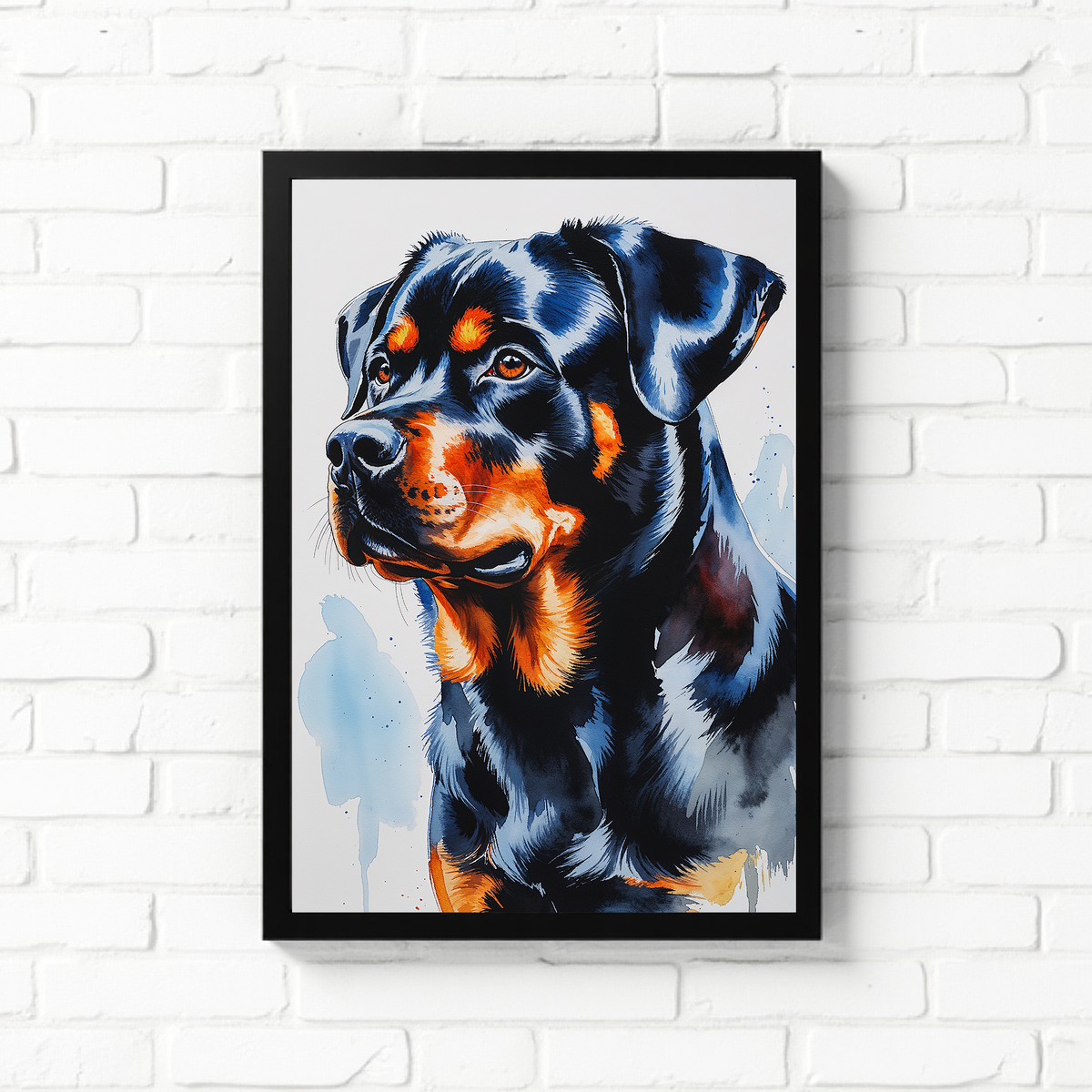
Rottweiler — Strength and Contrast
Dark fur, warm mahogany markings and a strong silhouette create a portrait with visual weight, while the eyes soften the mood.
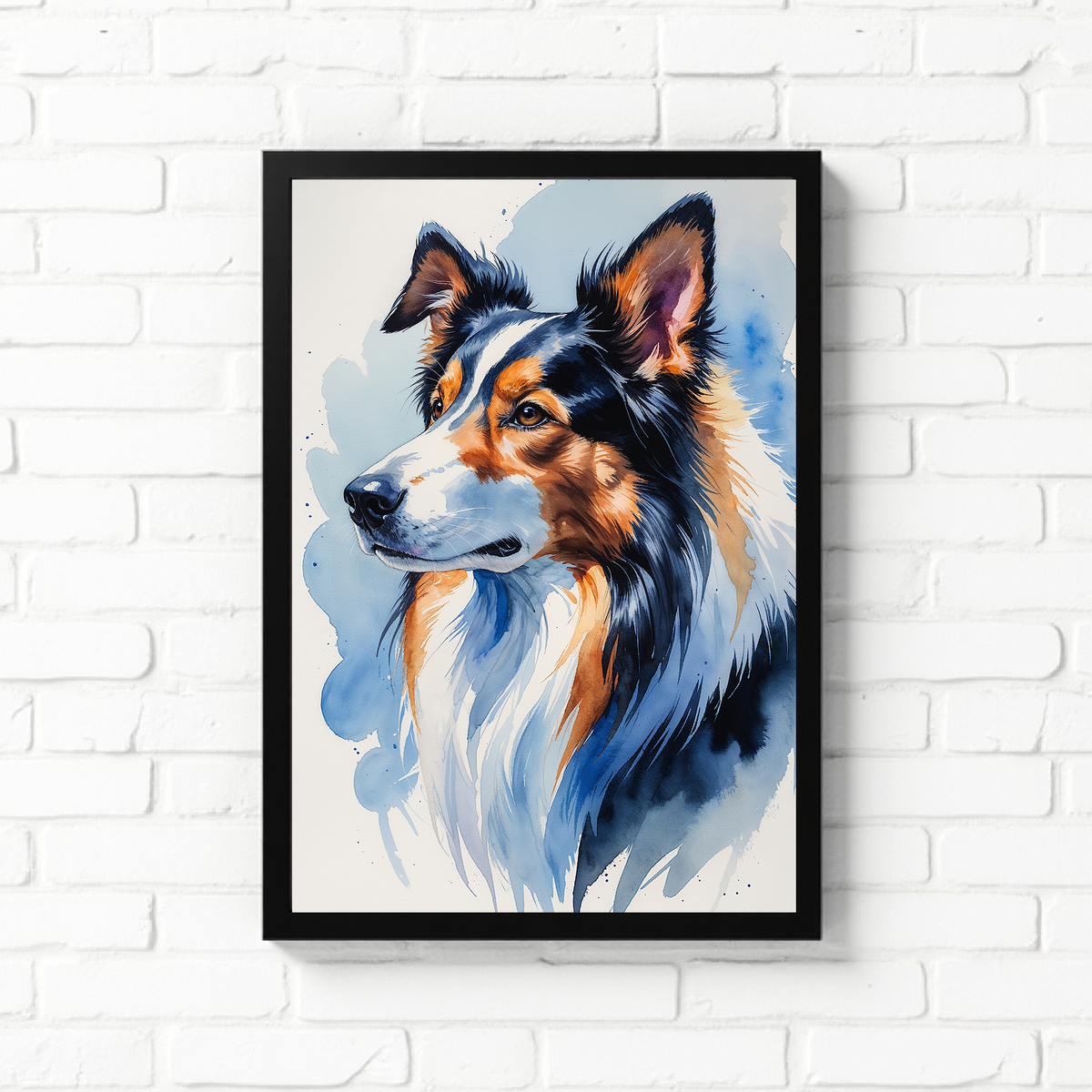
Sheltie — Texture and Expression
A flowing coat, expressive eyes and a distinctive face make this kind of portrait feel both detailed and gentle.
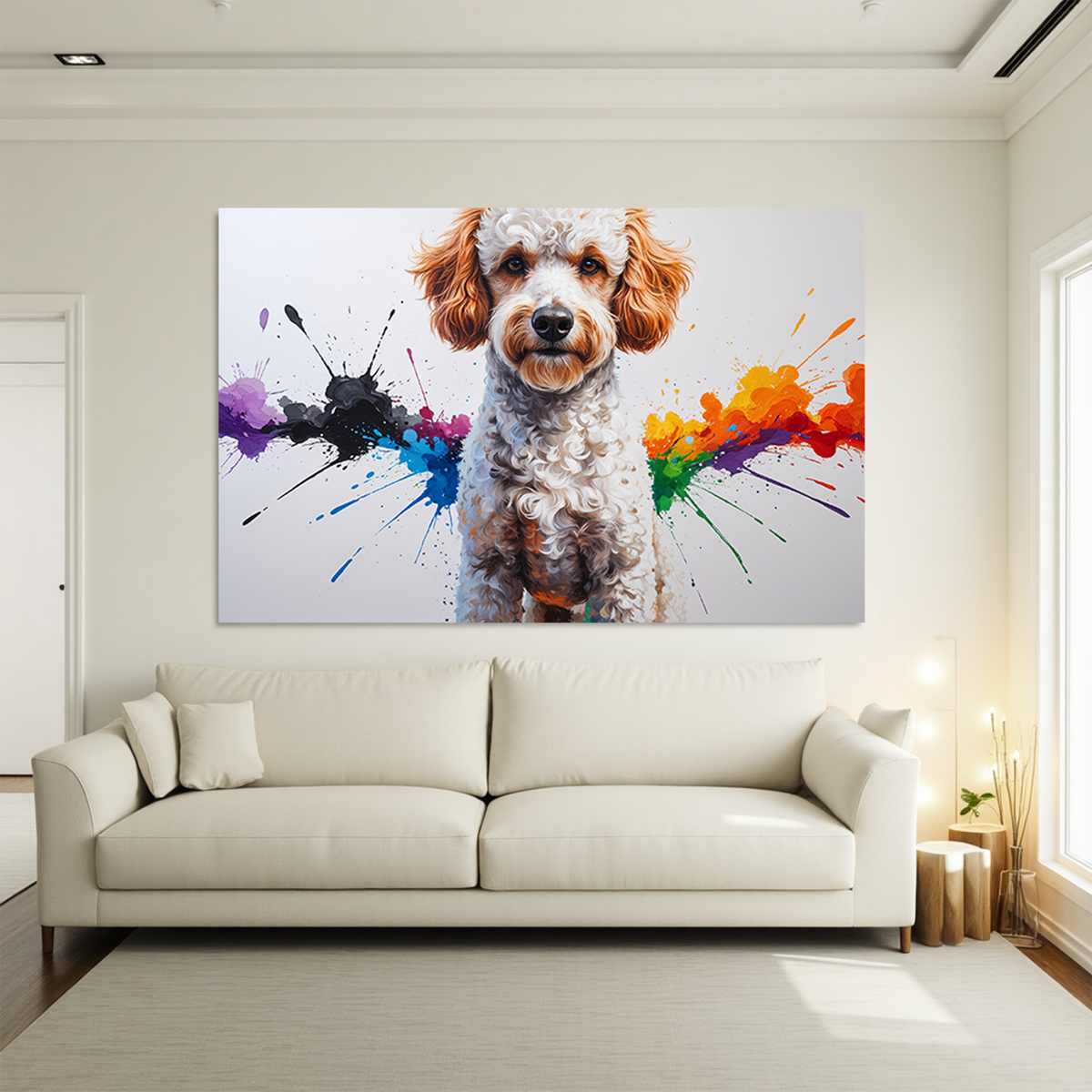
Poodle — Shape Becomes Personality
Curled texture and an elegant silhouette make the Poodle especially interesting when realism meets expressive color.
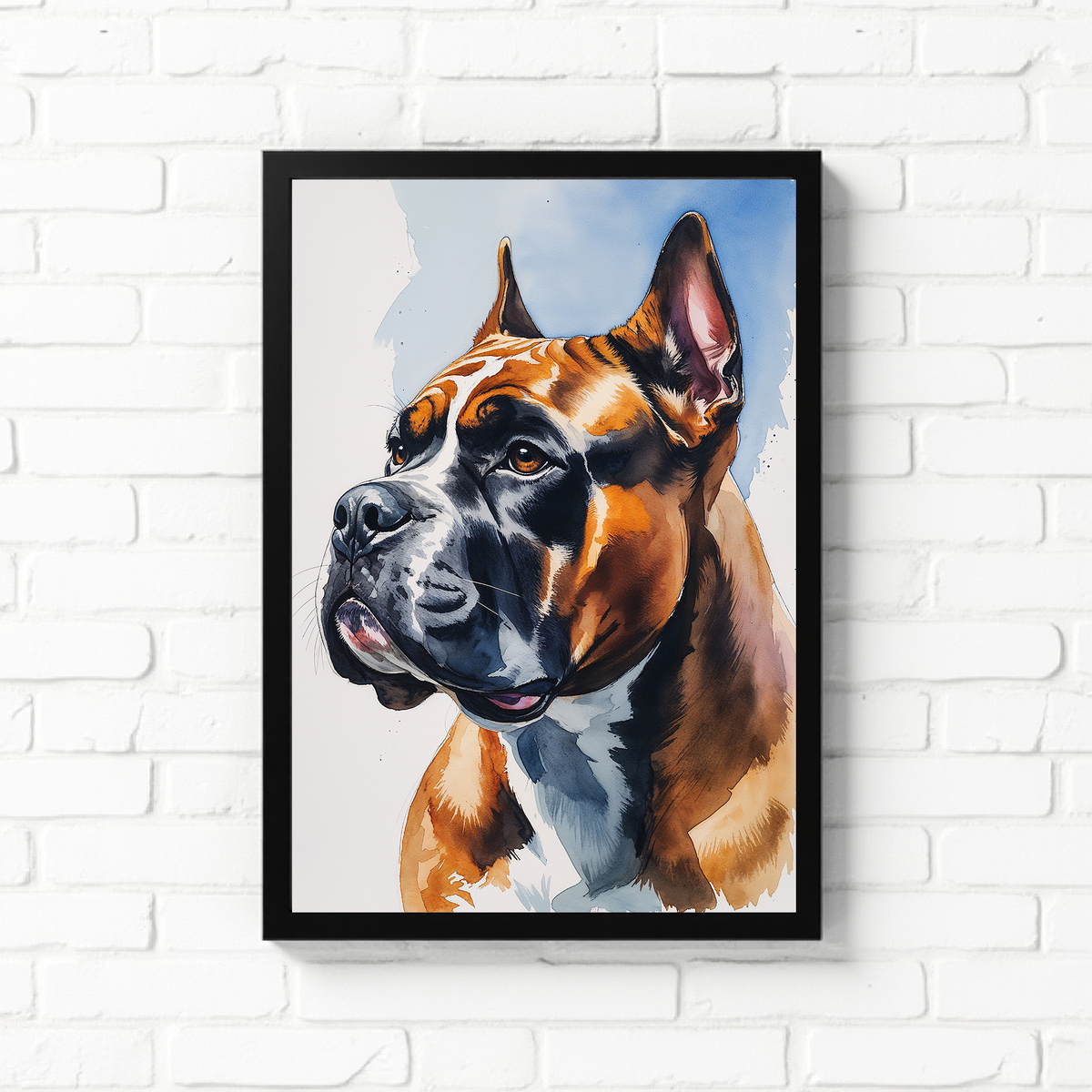
Boxer — Energy and Character
Attentive eyes, expressive ears and a playful presence make the Boxer naturally suited to lively portraiture.
Click any artwork to view it on Reflectionare.
What Different Dogs Bring to an Artist
Breed differences are not just facts for a breed guide. They are visual opportunities. One dog may give an artist pattern. Another gives movement. Another gives softness, scale or drama.
Siberian Husky — Eyes That Hold the Frame
Blue, brown or mismatched eyes can become the emotional center of a portrait, while the dense coat and strong facial markings add an almost graphic quality.
Golden Retriever — Warmth Without Trying
Gold, cream and honey tones naturally create a warm visual mood. Add the breed’s soft expression and friendly presence, and the portrait almost seems to carry its own light.
Border Collie — Intelligence in a Silhouette
The Border Collie’s attentive expression communicates concentration quickly, while its tricolor or black-and-white pattern gives an artist strong shapes to work with.
Dalmatian — Pattern Creates Rhythm
Spots turn the coat into a composition. Their irregular rhythm can lead the eye across the face and body, making the Dalmatian especially interesting for graphic and contemporary animal art.
Saint Bernard — Scale Creates Presence
A large head, substantial body and warm coat give the Saint Bernard an almost architectural presence, while its gentle expression keeps the portrait inviting.
Boxer — Movement Even in Stillness
The Boxer’s alert eyes, expressive ears and characteristic muzzle can make a static portrait feel as if the dog might move at any moment.
Why Some Dog Portraits Feel Like “That Dog”
Have you ever seen a portrait of a dog and immediately thought of a real dog you know?
It may not even be a perfect likeness. Sometimes one detail is enough: the way the ears sit, the slight angle of the head, the shape of the muzzle, a patch of white on the forehead, or a particular expression around the eyes.
Recognition is surprisingly selective. We do not need every hair to be correct. We need the right clues.
In pet portraiture, those clues become emotional shortcuts. They take us past “this is a dog” and toward “this is my dog.”
This is also why expressive watercolor can work beautifully for dog wall art. It can preserve the important visual clues while allowing edges, color and brushwork to remain alive.
Watercolor, Color or Realism? Three Ways to See a Dog
There is no single correct way to create a dog portrait. The style changes what we notice first.
Watercolor
Watercolor can make fur feel lighter and more atmospheric. Edges soften, washes overlap and the portrait can feel spontaneous rather than rigid. It is ideal when the dog should remain the emotional focus.
Colorful & Contemporary
Strong color and expressive paint effects shift the emphasis from exact realism toward energy. A familiar dog can suddenly feel like a piece of modern art.
Abstract Animal Art
The recognizable animal becomes a starting point for shape, movement, texture and emotion. You may still see the dog immediately, but the artwork asks you to feel it as much as identify it.
A Gentle Giant and the Feeling of Presence
Some dogs seem to fill a portrait simply through scale and expression. A Saint Bernard, for example, carries visual presence almost automatically: broad head, substantial body, warm coat and a famously gentle expression.
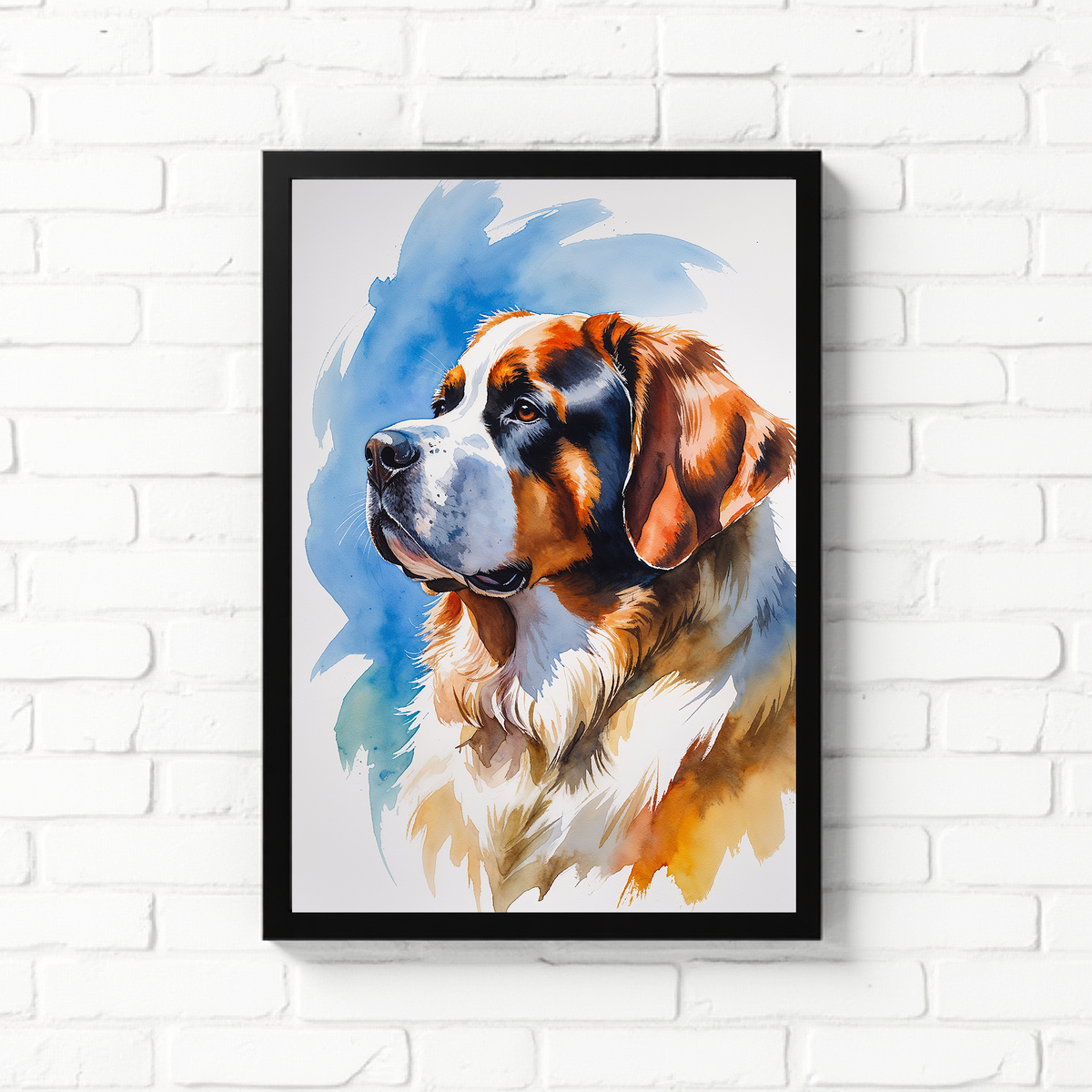
Saint Bernard — Quiet Presence
A gentle giant translated into warm watercolor tones, with a calm expression that suits welcoming interiors.
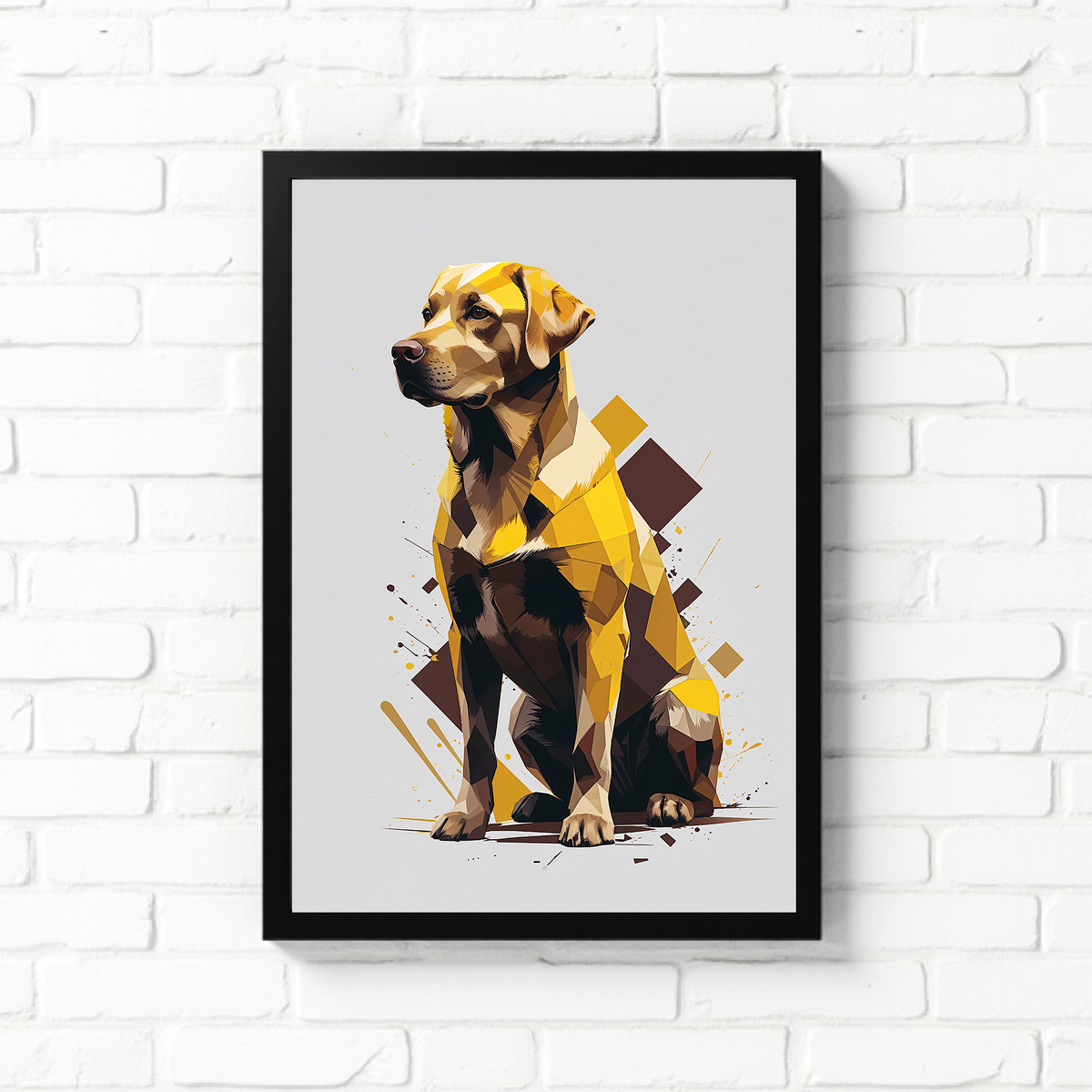
Labrador — Warmth in a Modern Form
Geometric planes, warm gold and a calm seated pose turn a familiar companion into a contemporary statement piece.
Why We Put Dog Portraits on Our Walls
This is where dog art becomes more than decoration.
A wall can hold a landscape because we love a place. It can hold an abstract painting because we love a color or a feeling. And it can hold a dog portrait because the animal itself means something to us.
Sometimes it is a portrait of a current companion. Sometimes it reminds us of a dog we grew up with. Sometimes we simply love the personality of a breed.
That emotional connection is one reason pet portraits can remain meaningful long after a particular decorating trend has passed. The artwork becomes a small visual marker of a relationship.
Reflectionare’s Tail & Paw Collection was created around this idea: our four-legged companions are not simply subjects to decorate with. They become part of the stories, routines and memories that make a home feel like ours.
Choosing a Dog Portrait for Your Home
The right dog artwork does not have to match your furniture perfectly. It has to feel right in the room. Think first about the atmosphere you want to create.
For a Calm Bedroom
Look for softer watercolor washes, gentle expressions and quieter backgrounds. A portrait with breathing room around the subject can feel more restful than a highly saturated composition.
For a Modern Living Room
Strong contrast, expressive color and a confident silhouette can create a memorable focal point. Contemporary dog art works especially well with clean architectural lines.
For a Home Office
Choose a portrait with a strong gaze or distinctive character. Intelligent-looking breeds such as Border Collies can create an energetic visual presence without overwhelming the space.
For a Gallery Wall
A dog portrait does not need to stand alone. Pair it with an abstract piece, botanical print or travel poster. The connection can come from color, scale or mood rather than subject.
Dogs in Art Are Really About Something Bigger
The history of dogs in art is interesting because it is not really a story about one animal. It is a story about the relationship between animals and people.
Dogs have worked beside us, travelled with us, protected us, entertained us and lived quietly inside our everyday routines. Their roles have changed, but their ability to become emotionally significant has remained remarkably constant.
That is why a dog portrait can work on so many levels at once. It can be beautiful. It can be decorative. It can celebrate a breed. It can capture a personality. And, sometimes, it can bring back a memory that has nothing to do with decorating at all.
Perhaps that flexibility is the real reason dogs have remained such powerful subjects for artists. They are familiar enough to recognize instantly, yet individual enough to tell an entirely different story every time.
Dogs, Cats, and the Animals We Bring Into Our Visual Worlds
Dogs are not the only animals that carry this kind of emotional weight. Cats have inspired artists for equally fascinating reasons — through independence, gaze, movement, texture and mysterious presence.
If you enjoyed looking at dogs through the lens of art rather than breed history, continue with Cats in Art: Why Felines Have Inspired Artists for Centuries.
Together, these stories reveal something simple: when an animal becomes part of our visual world, we are rarely interested in anatomy alone. We are interested in personality, memory and the feeling that the subject brings with it.
Let Your Favorite Four-Legged Character Become Art
Whether you are drawn to the quiet intelligence of a Border Collie, the strength of a Rottweiler, the warmth of a Saint Bernard, the energy of a Boxer or the expressive texture of a Poodle, dog art offers a way to bring personality into a space — not just another picture on a wall.
Explore Tail & Paw Explore All Wall ArtBecause the art we choose often says a little something about the lives we love. ♡
Reflectionare — Where the inner world becomes visual.